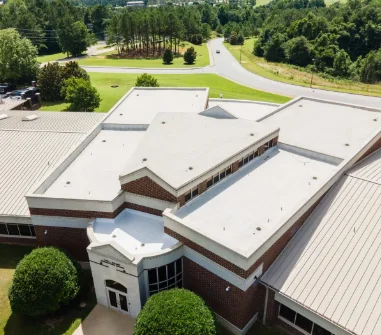
A commercial roof showing signs of age does not always need a full tear-off and replacement. If the existing roof is still structurally sound, a roof coating system may be applied over the prepared surface to add protection and extend the usable life of the roof.
Roof coatings are liquid-applied systems that cure over the existing roof surface to create a seamless protective layer. Whether a roof qualifies depends on its current condition, moisture beneath the surface, drainage, existing roofing material, and the coating system being considered. Understanding those factors helps building owners determine when restoration is a practical alternative to replacement.
What Is a Roof Coating System?
A roof coating is a fluid-applied, seamless membrane installed directly over a prepared existing roof surface. Once cured, it forms a continuous, flexible protective layer bonded to the roof beneath it. Unlike a patch or single-point repair, a coating covers the roof surface as a unified system rather than addressing only isolated problem areas.
How Does a Roof Coating Work?
A roof coating begins as a liquid material that cures to form a flexible membrane over the existing roof surface. Depending on the system, coatings may be acrylic, silicone, polyurethane, or another formulation designed for specific roof conditions and performance requirements.
Before the coating is applied, the existing roof must be inspected, cleaned, and prepared. Active leaks, damaged seams, flashing problems, and other defects are addressed first so the coating is installed over a suitable surface. Once applied and cured, the coating creates a continuous layer that helps protect the existing roof from water, UV exposure, and weathering while accommodating normal movement as the roof heats and cools.
What Roof Types a Coating System Works On
Roof coating systems can be used over several types of existing commercial roofing, although compatibility depends on the condition of the roof and the specific coating being applied. Common candidates include:
- TPO and EPDM single-ply membrane roofs
- Modified bitumen roofing
- Metal roofing systems
- Spray polyurethane foam roofs
- Certain built-up roof systems
Asphalt shingle roofs require different consideration. Industry guidance advises caution when applying field coatings over installed asphalt shingles, and some shingle manufacturers warn that aftermarket coatings can affect moisture performance, fire ratings, or the shingles themselves. For homeowners with a standard asphalt shingle roof, products designed specifically for steep-slope residential roofing are generally a better place to start when energy performance is the goal.
Roof Coating Benefits Beyond Waterproofing
Waterproofing and weather protection are primary reasons to restore a commercial roof, but a coating system can provide other benefits when the existing roof is a good candidate. Because the coating is installed over the prepared roof surface, much of the existing system can remain in place rather than being removed and replaced.
Depending on the coating system and building, potential benefits include:
- Reduced solar heat absorption: Reflective coatings can lower roof surface temperatures by reflecting more sunlight rather than absorbing it as heat.
- Less tear-off waste: Restoring the existing roof can reduce the amount of roofing material removed and sent to a landfill.
- Extended roof service life: A coating can protect an aging but serviceable roof from continued UV exposure and weathering.
- Less disruption: Avoiding a full tear-off can reduce the amount of demolition occurring above an occupied commercial building.
- Future restoration options: Some coated roofs may qualify for recoating later if the underlying roof remains in suitable condition.
The actual benefit depends on the existing roof, coating selected, insulation, climate, and how well the system is maintained after installation.
Elastomeric Roof Coating: Acrylic, Silicone, and Polyurethane Compared
Elastomeric roof coatings are designed to remain flexible as the roof expands and contracts with changing temperatures. Acrylic, silicone, and polyurethane coatings can all provide that flexibility, but they have different strengths. The right system depends on the existing roofing material, drainage, exposure, traffic, and performance requirements.
Acrylic Roof Coatings
Acrylic coatings are water-based and highly reflective, making them a common option when UV protection and roof surface temperature are priorities. They generally perform best on roofs with positive drainage because prolonged ponding water can affect the coating’s performance.
Silicone Roof Coatings
Silicone coatings offer strong resistance to UV exposure and standing water, making them useful for commercial roofs where ponding water is a concern. They also retain flexibility as the roof moves through temperature changes. Surface preparation and compatibility with the existing roof remain important when determining whether silicone is the right system.
Polyurethane Roof Coatings
Polyurethane coatings are known for durability and resistance to impact and foot traffic. That can make them useful around rooftop equipment or other areas where maintenance crews regularly access the roof. Different polyurethane formulations can also be used as part of multi-layer coating systems when additional durability is needed.
No single coating chemistry is the best choice for every commercial roof. The existing membrane, drainage, roof condition, expected traffic, and goals for the restoration should determine which system is used.
Roof Coating Application: What the Process Involves
A roof coating is only as effective as the condition of the roof beneath it and the preparation completed before application. The process starts by determining whether the existing roof is a suitable candidate and addressing problems that should not simply be covered by a coating.
A typical roof coating application includes:
- A roof inspection and moisture survey to evaluate the existing membrane, insulation, and underlying roof system
- Repair of active leaks, damaged seams, flashing problems, and other defects identified during the inspection
- Cleaning and preparation of the roof surface to remove dirt, debris, biological growth, and contaminants that could interfere with adhesion
- Primer application when required for the existing substrate and coating system
- Treatment of seams, penetrations, drains, and other vulnerable areas as required by the system specifications
- Application of the coating at the thickness specified for the selected system
- A final inspection to verify coverage, application thickness, and the condition of the completed restoration
Application thickness matters because coating systems are installed according to manufacturer specifications, and warranty requirements can vary based on the product and system selected. Measuring and documenting the application helps verify that the finished roof meets those requirements rather than relying on how the coating looks from the surface.
A properly installed coating can extend the service life of an existing commercial roof, but there is no single lifespan that applies to every system. Coating chemistry, application thickness, roof condition, drainage, climate, maintenance, and manufacturer requirements all affect how long a restoration can remain in service. Some roofs may also qualify for recoating later, allowing the existing roof system to remain in place longer before full replacement becomes necessary.
Roof Coating Cost Versus Replacement
For a roof that qualifies for restoration, coating can cost less than a full tear-off and replacement because much of the existing roof system remains in place. The project can avoid many of the demolition, disposal, labor, and replacement-material costs involved in removing and rebuilding an entire commercial roof.
The size and condition of the roof, required repairs, coating system, surface preparation, and application requirements all affect the final cost. A roof with extensive wet insulation or underlying deterioration may require enough corrective work that restoration is no longer the practical option.
That is why cost comparisons should begin with the condition of the existing roof. A moisture survey and inspection can determine whether there is enough serviceable roofing material left to make restoration worthwhile or whether the building is better served by planning for replacement.
When a Roof Coating Is Not the Right Fit
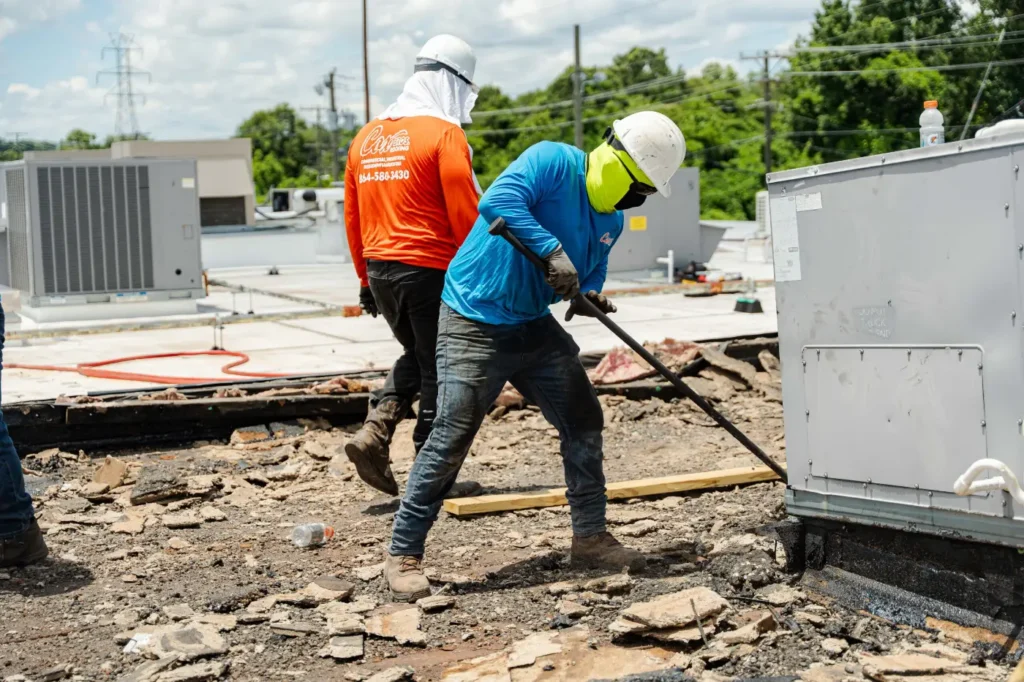
Roof coatings are designed to restore an existing roof that still has a serviceable system underneath. Extensive trapped moisture, deteriorated insulation, structural damage, or widespread membrane failure can make restoration impractical. In those situations, repairing damaged areas or replacing the existing roof may provide better long-term value than applying a coating over a system that has already deteriorated too far.
That determination should come from an inspection of the existing roof rather than age alone. A roof that looks worn may still be a good restoration candidate, while another roof of the same age may have underlying moisture or damage that changes the recommendation.
Find Out if Your Commercial Roof Can Be Restored
Roof coating systems give building owners another option between repeated repairs and a complete tear-off. When the existing roof is in suitable condition, restoration can protect the surface, extend its usable life, and preserve roofing materials that do not yet need to be replaced.
Cox Bros. Roofing evaluates restoration alongside the other commercial roofing options available in Spartanburg, including repair, maintenance, and full replacement. We inspect the existing system first so the recommendation is based on the condition of your building rather than a one-size-fits-all approach.
Schedule a commercial roof inspection with Cox Bros. Roofing to find out whether a coating system makes sense for your building.