The honest answer depends on the age of your system, the extent of the problem, and what makes financial sense long-term. A patch is not always the cheaper choice, and a full replacement is not always the overreaction it might seem. If you are dealing with a leak, storm damage, or a system that has been in the building since you bought it, a professional assessment will give you a clear answer without pressure. Schedule a free roof inspection in Spartanburg and get a straight read on what your building actually needs.
This guide walks through the factors that separate targeted commercial roof repairs from a full system replacement, so you can go into that conversation informed. Business owners in the Upstate deal with a specific set of weather and operational demands that affect how commercial roofing systems age, and those local factors matter when making this call.
When Commercial Roof Repairs Are the Right Call
Targeted repairs make sense when the problem is isolated, and the rest of the system has meaningful life remaining. A failed seam, a small membrane puncture, flashing failure around rooftop equipment, or a localized leak at a drain are all situations where focused work solves the problem without removing an otherwise sound system.
A repair is generally the right move when:
- Your system is less than halfway through its expected lifespan, and damage is confined to one area
- The underlying deck is dry and structurally sound
- You have a single point of failure, such as a seam separation or flashing gap
- Storm-related damage is limited to one section of the membrane or surface
- A proactive maintenance program has kept the system in generally good condition
One thing worth knowing about the local climate: the Upstate region sees strong afternoon thunderstorms, occasional hail, and humid summers that put steady wear on commercial membranes. A system that appears fine from the ground may have ponding issues, membrane softening, or flashing failures that are only visible during a close inspection. That is why an assessment matters before committing to either path.
What a Repair Will and Will Not Solve
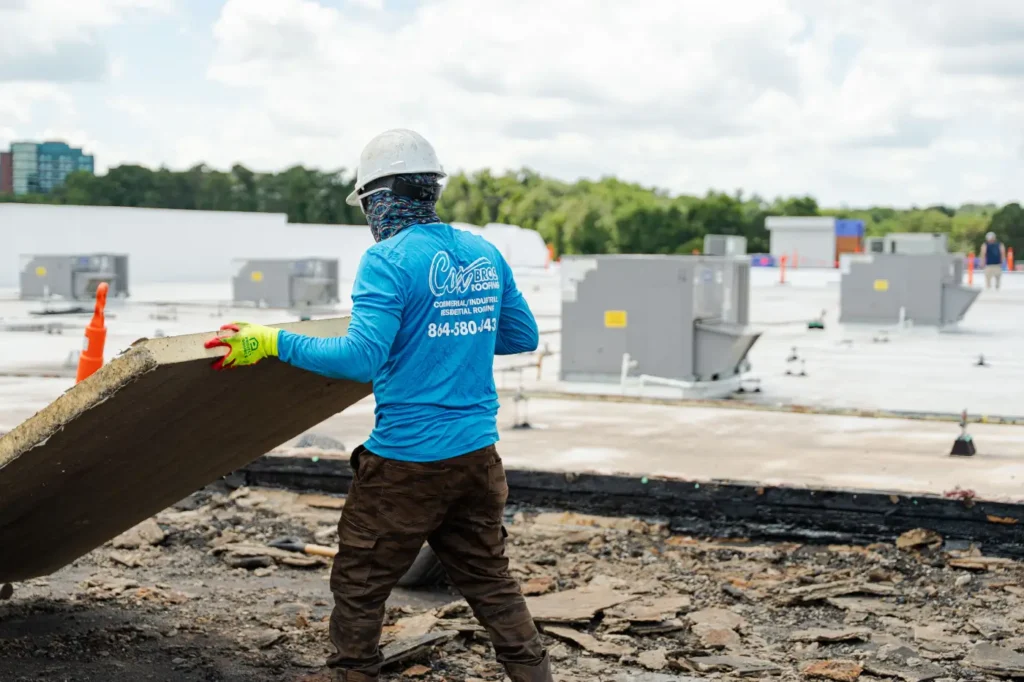
A targeted fix addresses the specific failure point. It does not reset the clock on the system’s overall lifespan. If the membrane is deteriorating across the surface or seams are failing in multiple locations, patching one area leaves the rest on borrowed time. You may resolve the leak today and find a new one in a different section within the year.
For business owners, that cycle has real operational costs. Repeated service calls, interior damage to inventory or equipment, and tenant complaints all add up. At some point, the math stops working in favor of ongoing repairs, and a replacement delivers a defined warranty period and a predictable maintenance budget instead.
When Full Replacement Makes More Sense
A complete system replacement becomes the smarter investment when problems are widespread, the system’s age is working against you, or repeated fixes are accumulating without resolving the underlying issue. According to the International Association of Certified Home Inspectors, commercial roofing systems have expected lifespans that vary significantly by material, and when yours is approaching or past that range, repair costs start funding a losing battle.
Replacement tends to be the better path when:
- The system is at or past its expected lifespan for the material type
- The membrane shows widespread blistering, cracking, or separation
- You have had multiple leaks in different areas over the past few years
- The deck shows soft spots, sagging, or moisture intrusion below the membrane
- Storm-related damage covers more than 25 to 30 percent of the roof surface
- Your insurance carrier has approved a full replacement based on the adjuster’s assessment
- You are refinancing, selling, or re-leasing the property, and need a system that passes due diligence
The Cost Comparison Business Owners Actually Need
Many building owners assume a repair is always the lower-cost option. That is true on a per-visit basis. But a deteriorating commercial system that requires attention every year or two accumulates costs quickly, and those costs come without any warranty protection or predictability. A full replacement, by contrast, comes with manufacturer warranties on materials and a workmanship guarantee, giving you a defined period of coverage rather than an open-ended service cycle.
A replacement also protects asset value. Buyers, lenders, and commercial tenants treat system age as a negotiating point. A roof nearing the end of its life can reduce your property’s appraised value or derail a lease or sale negotiation by more than a replacement would have cost. The long-term math almost always favors acting before structural issues compound.
Key Factors That Drive the Decision
No two commercial systems age the same way. Beyond age and affected area, a few specific factors consistently push the decision in one direction or the other.
System age relative to material lifespan
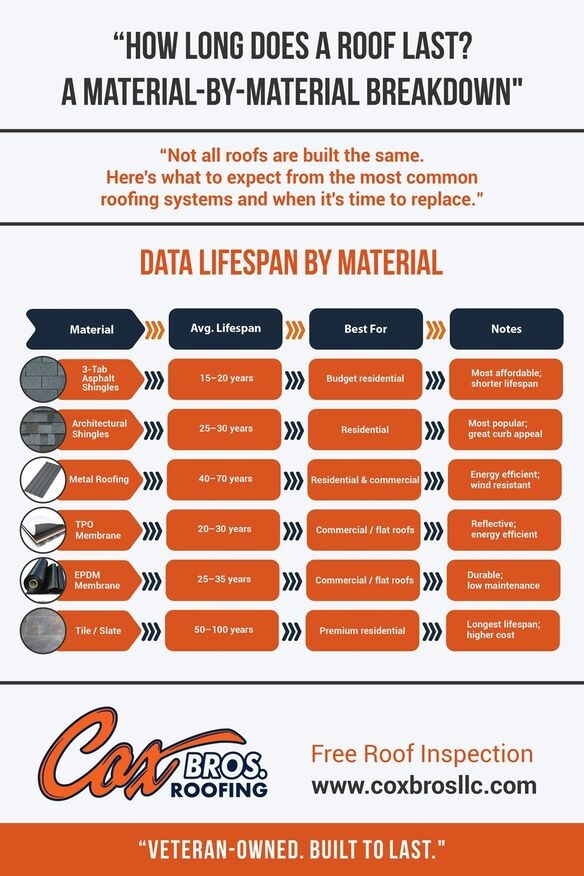
A TPO or EPDM membrane installed 10 years ago on a well-maintained building is a repair candidate. The same membrane at 20 to 25 years is approaching or past its designed lifespan. Age alone is not the deciding factor, but it frames every other consideration.
Extent and pattern of damage
A single isolated failure is a repair. Multiple failures in different locations over a short period are a pattern, and patterns indicate systemic deterioration that targeted fixes will not stop.
Deck condition
If moisture has reached the deck, whether through soft spots, sagging, or visible rot, the repair equation changes entirely. Deck replacement adds significant cost and often makes a full system overhaul the more practical path.
Insurance claim status
When a major storm event triggers an insurance claim, and the adjuster approves a full replacement, negotiating that down to a patch may leave valid coverage on the table and leave the building in a compromised state. Understanding how to identify wind damage after a storm helps you document the claim accurately before your carrier makes that determination.
Operational and tenancy considerations
A repair can often be completed with minimal disruption to business operations. A full replacement requires more planning around access, business hours, and tenant notification. That logistical difference is real, but it should not tip the decision when a replacement is clearly the right call financially and structurally.
How Material Type Affects the Decision
TPO and EPDM membranes
These are the most common commercial roofing materials on Upstate business properties. Seam failures, membrane punctures, and flashing gaps are manageable repair items when caught early. Widespread membrane degradation, chronic ponding water damage, or repeated seam failures across multiple areas typically indicate that a full replacement will deliver better long-term value than continued patching.
Metal systems
Metal lasts significantly longer than membrane systems, often 40 years or more with proper maintenance. Fastener issues, minor seam joint failures, and isolated rust spots are manageable. Widespread panel separation, extensive corrosion, or structural compromise moves the conversation toward replacement. Because of the longer lifespan, commercial roof maintenance is especially cost-effective on metal systems.
Built-up and modified bitumen systems
Older built-up systems on commercial properties in this region are increasingly being replaced with modern membrane systems rather than repaired. If your building has an aging built-up roof, the repair-vs-replace analysis should include a material upgrade discussion, since continued investment in an outdated system has real limits.
What a Thorough Commercial Inspection Covers
A proper assessment goes well beyond visible surface damage. A thorough commercial inspection covers the membrane condition across the full surface, seam integrity, flashing at penetrations and equipment curbs, drainage and ponding water patterns, deck condition below the membrane, and any signs of moisture intrusion inside the building.
Cox Bros provides written assessments with no obligation to move in either direction. If you are not sure whether your system calls for a repair or a full replacement, that written report gives you the information to make the right call for your building and your budget. Knowing what to look for in a commercial roofing contractor before you commit to any scope of work is also worth reviewing. The contractor you choose affects both the quality of the work and the warranty backing it.
Making the Right Call for Your Building
Repair when the problem is isolated, the system has meaningful life remaining, and the deck is sound. Replace when the system is aging out, damage is widespread, or the cost cycle of ongoing repairs stops making financial sense. When you are not sure, get a professional opinion before spending money in either direction.
The worst outcome for a business owner is patching a system that needed replacement, finding a new leak six months later, and adding interior damage to the bill. An honest assessment from an experienced local contractor solves that problem before it starts.
Connect With True Roofing Professionals
Trust your roofing project to the team that proudly stands behind every job.
Cox Bros. Roofing
Built with Quality and Integrity